ῲ If you are doing color work with stranding or slip stitches and have trouble keeping the threads being carried over on the wrong side loose enough, hold one or two of your left hand fingers between the knitting and the stranding when you are forming a stitch with the contrast color that is going across more than 2 or 3 stitches in the back. That much extra is usually just enough to allow for the stretch of stockinette stitch and keep it from pulling too tight. Eventually you may be able to skip this step as you get used to the looser tension.
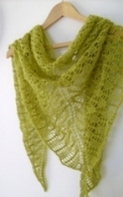
ῲ If you are making a shawl, scarf, or any lacework that will be stretched in blocking and has a knit in the front and back increase, consider doing a knit and purl in the same stitch instead. It is a bit more elastic and the purl bump is not much different from the bump you get with Kf&b. In any case, it is useful to be familiar with many types of increases so you choose what looks and functions best for the project you are working on.
ῲ Use spare circular needles as stitch holders. This is useful when instructions call for moving stitches to waste yarn because it is quicker to transfer them back again onto the real needle when needed. And it can help if you want to try on something in progress, even if it is being knit on dpns.
ῲ Sock patterns worked cuff down often call for decreases every other round at the toe. Try doing that until your stitches are decreased by half and then decrease every round until they are halved again, then do the grafting/kitchener stitch. The result is a really well fitting sock.
ῲ To get a snug fitting wrist for mitts, use a smaller needle size for the ribbing and consider adding a cable twist, even if it is only twisted in one or two rows. The twist will pull in the wrist part just enough to ensure they are loose around the wrist after being pulled on and off in
everyday wear.
ῲ When picking a pattern to knit, think function and scrutinize photos on Ravelry. Too often photographs show a sweater hanging up, shawls laid out, and socks on a sock blocker. This does not tell you at all how what those finished objects look like when worn or whether they will work on the body that you want to make them for.
ῲ This website shows the most common kinds of increases very clearly, though not k and p into the same stitch: http://www.knitty.com/ISSUEwinter09/FEATwin09TT.php.
~Aleen Caplan-Yamasaki, Vice President
ῲ If you are making a shawl, scarf, or any lacework that will be stretched in blocking and has a knit in the front and back increase, consider doing a knit and purl in the same stitch instead. It is a bit more elastic and the purl bump is not much different from the bump you get with Kf&b. In any case, it is useful to be familiar with many types of increases so you choose what looks and functions best for the project you are working on.
ῲ Use spare circular needles as stitch holders. This is useful when instructions call for moving stitches to waste yarn because it is quicker to transfer them back again onto the real needle when needed. And it can help if you want to try on something in progress, even if it is being knit on dpns.
ῲ Sock patterns worked cuff down often call for decreases every other round at the toe. Try doing that until your stitches are decreased by half and then decrease every round until they are halved again, then do the grafting/kitchener stitch. The result is a really well fitting sock.
ῲ To get a snug fitting wrist for mitts, use a smaller needle size for the ribbing and consider adding a cable twist, even if it is only twisted in one or two rows. The twist will pull in the wrist part just enough to ensure they are loose around the wrist after being pulled on and off in
everyday wear.
ῲ When picking a pattern to knit, think function and scrutinize photos on Ravelry. Too often photographs show a sweater hanging up, shawls laid out, and socks on a sock blocker. This does not tell you at all how what those finished objects look like when worn or whether they will work on the body that you want to make them for.
ῲ This website shows the most common kinds of increases very clearly, though not k and p into the same stitch: http://www.knitty.com/ISSUEwinter09/FEATwin09TT.php.
~Aleen Caplan-Yamasaki, Vice President
 RSS Feed
