
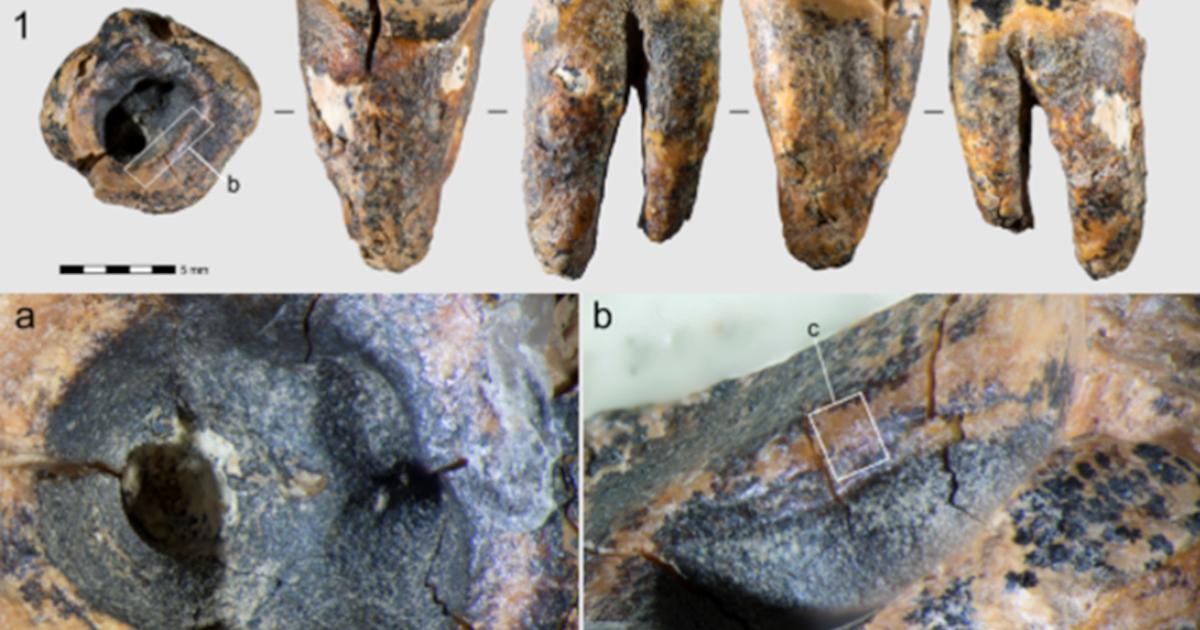

A deep hole discovered in a 60,000-year-old Neanderthal tooth was likely created intentionally using a stone drill, making it the oldest known evidence of deliberate dental surgery in human history.
This remarkable finding from Chagyrskaya Cave in Siberia challenges the long-held assumption that advanced medical procedures were exclusive to Homo sapiens. Instead, it suggests our extinct evolutionary cousins possessed the cognitive ability to diagnose a medical problem and the fine motor skills to treat it using specialized tools.
Prehistoric Root Canal
The 59,000-year-old lower left second molar was originally unearthed in 2016, but researchers were initially unsure what caused the deep, unusual concavity on its surface. Recent experimental evidence and microtomographic analysis have now revealed that the hole was intentionally made to clean out severely rotten tooth tissue. For a long time, the Neanderthals were considered intellectually inferior, but discoveries like this continue to prove otherwise.
"The fact that this invasive treatment took place and the person survived lends me to believe that this is another example of the really very sophisticated Neanderthal understanding of human biology and when you need to intervene," study co-author John W. Olsen, a professor emeritus of anthropology at the University of Arizona, told Live Science.
The individual suffered from deep dental caries (cavities), and the researchers identified two distinct types of manipulation. Along with the drilled hole, they found straight grooves characteristic of tooth picking near the gumline, indicating a sustained effort to relieve pain.
Stone Age Dental Tools
To prove that the Neanderthals could have performed such a procedure, the research team conducted experiments on modern human teeth. They discovered that the specific grooves and markings found on the ancient molar could be replicated using a twisting motion with small, pointed stone tools made of locally available jasper.
Multiple examples of these fine, retouched points and perforators have been found in Chagyrskaya Cave, indicating the tools were readily available. The Chagyrskaya Cave in the Altai Mountains has been a treasure trove of Neanderthal artifacts and remains.
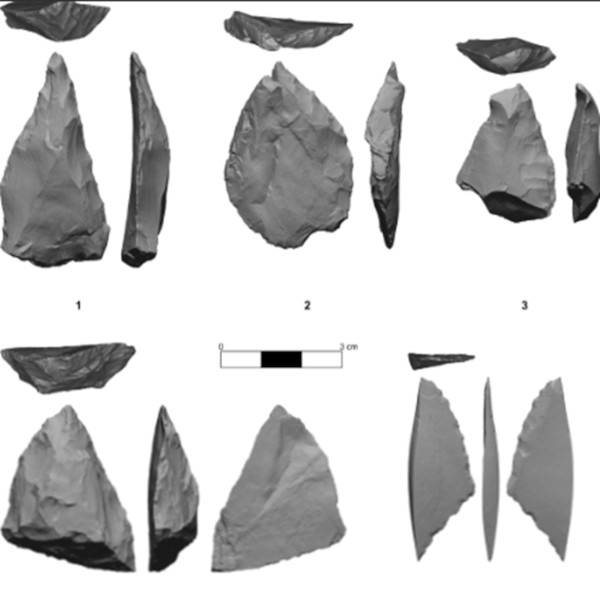
Images of stone tools (jasper perforators) used for dental drilling. (Zubova et al., 2026, PLOS One, CC-BY 4.0)
"Did they look at a carious, painful tooth and suddenly invent a new tool? No, I doubt it. Instead, what they likely did was repurpose an existing tool design for a novel, highly specialized task," archaeologist Kseniya Kolobova of the Russian Academy of Sciences told ScienceAlert.
Evidence of chew marks overlaying the drilled grooves indicates that the Neanderthal survived the painful operation and lived long enough for normal chewing to begin wearing away the evidence of the drilling.
- Stone Tools Reveal Epic Trek of Nomadic Neanderthals
- 130,000-Year-Old Neanderthal Teeth Reveal Evidence of Prehistoric Dentistry
Rethinking Neanderthal Intelligence
This discovery pushes back the timeline for intentional dentistry by roughly 45,000 years. Previously, the oldest known evidence of dental treatment belonged to Homo sapiens and dated to about 14,000 years ago in Italy.
The ability to intuit the source of pain, comprehend that it could be eliminated, and deliberately select the most effective intervention points to a high level of cognitive capacity. It adds to a growing body of evidence that Neanderthals were far from the brutish "knuckleheads" they were once thought to be, and possessed significant cognitive abilities.
Previous discoveries have shown that Neanderthals created art, wore jewelry, buried their dead, and cared for sick and injured members of their communities. They also used medicinal plants and, as this study shows, practiced invasive surgery.
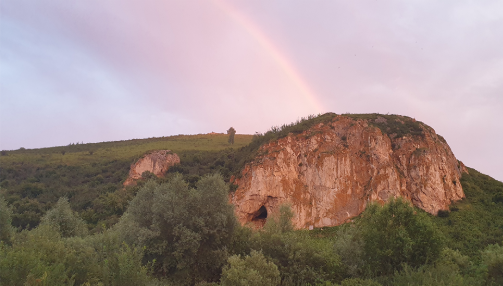
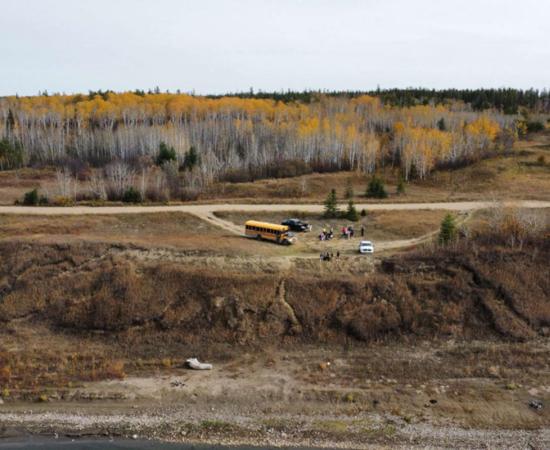
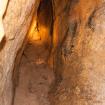
Chagyrskaya Cave, southwestern Siberia, Russia. (Zubova et al., 2026, PLOS One/CC-BY 4.0)
The findings from Chagyrskaya Cave not only rewrite the history of medicine but also bring Neanderthal behavior much closer to that of modern humans, differentiating them from the instinctive self-medication seen in other primates.
Top image: Chagyrskaya 64 molar tooth showing the drilled cavity. Source: Zubova et al., 2026, PLOS One, CC-BY 4.0
References
Berdugo, S. 2026. 'Exceptional' drilled tooth reveals Neanderthals practiced dentistry in Siberia 60,000 years ago. Available at: https://www.livescience.com/archaeology/neanderthals/exceptional-drilled-tooth-reveals-neanderthals-practiced-dentistry-in-siberia-60-000-years-ago
Cockerill, J. 2026. The Earliest Known Dentistry Wasn't Done By Our Species. Available at: https://www.sciencealert.com/the-earliest-known-dentistry-wasnt-done-by-our-species
Zubova, A. 2026. Earliest evidence for invasive mitigation of dental caries by Neanderthals. Available at: https://doi.org/10.1371/journal.pone.0347662