

A new study has revealed that Neanderthals possessed an unexpected and highly durable tool in their kits: the teeth of prehistoric rhinoceroses. Marks found on fossilized rhino teeth discovered in caves across France and Spain suggest these ancient hominids used the massive molars as multipurpose, heavy-duty tools. This fascinating discovery provides further evidence of Neanderthal ingenuity, showing they used these robust teeth as anvils and hammers for shaping stone tools and processing materials like vegetable fibers or animal hides.
About 100,000 years ago, Neanderthals coexisted with several species of rhinoceros in Europe, including the narrow-nosed rhinoceros (Stephanorhinus hemitoechus). The recent research, published in the Journal of Human Evolution, suggests that these hominids deliberately selected rhinoceros teeth for their hardness, robustness, and durability, exploiting them for a variety of demanding tasks.
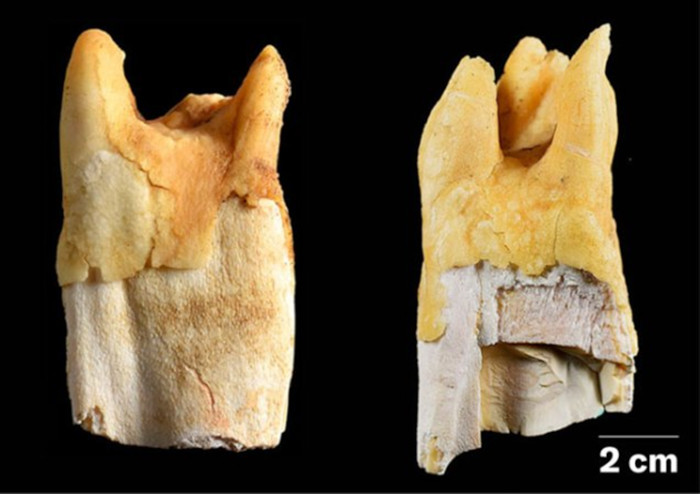
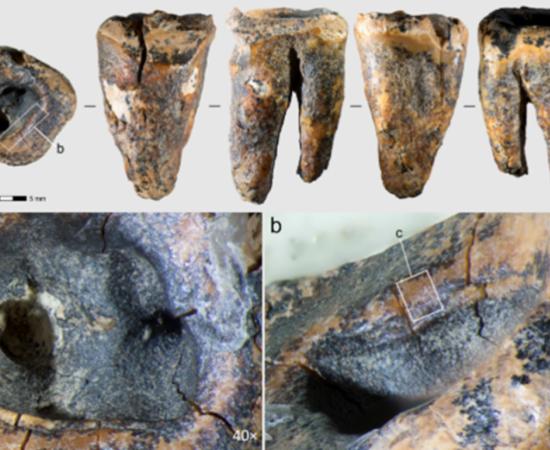
Modern rhino teeth used to replicate Neandertal activities showed markings very similar to the fossilized teeth found in the caves. (Sanz-Royo et al./Journal of Human Evolution)
A Dental Toolkit for the Paleolithic
Archaeologists have long known that Neanderthals repurposed animal remains, such as bones and antlers, as hammers or retouchers to keep their stone tools sharp. However, few studies have investigated the potential use of teeth. The research team, led by Alicia Sanz-Royo of the University of Aberdeen, was intrigued by unexpected markings on several teeth. They surveyed a dozen archaeological sites in France and Spain, focusing on El Castillo in Spain and Pech-de-l'Azé II in France.
At these sites, researchers found rhinoceros teeth bearing distinct grooves, notches, sliding marks, and scrapes, which strongly suggested repeated hitting and percussive use. Microscopic analysis confirmed that these markings were not caused by chewing or natural taphonomic processes before or after the animal's death. According to Science News, the team identified at least three distinct types of damage patterns consistent with tool use rather than butchering or gnawing.
To test their hypothesis, the researchers conducted controlled archaeological experiments using modern rhino teeth obtained from zoological reserves. They reenacted tasks Neanderthals might have regularly performed, such as using the teeth as soft hammers to sculpt stone tools and as anvils for cutting vegetable fibers and leather.
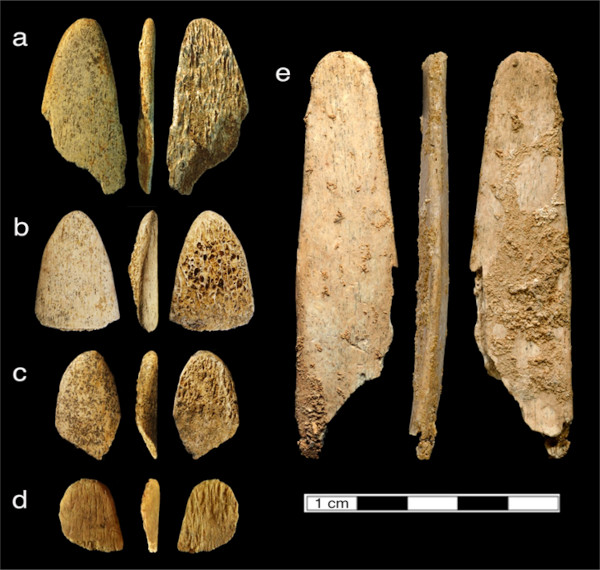
Bone tools used by Neanderthals, showing the variety of animal-derived implements in their toolkit. (Nature / CC BY 4.0)
The Effectiveness of Rhino Molars
The experiments produced damage on the modern teeth — specifically scaled areas, pitting, and microfractures — that closely matched the patterns observed on the fossilized teeth. Despite the significant weight and bulk of the rhino molars, which can weigh up to 380 grams, the experimenters found them surprisingly effective. Larger teeth with flatter surfaces proved the most comfortable to use, providing a stable and durable platform for precision tasks like flint knapping.
Based on the types of teeth that bore the marks, the researchers concluded that Neanderthals were selective, choosing teeth with the right size or shape for the job at hand. Interestingly, the majority of the rhino teeth utilized by Neanderthals appear to have been harvested from elderly animals. This may indicate that the teeth of older individuals were more suitable for tool use, possibly because of their flatter, worn surfaces, or it could simply reflect that aging rhinos were easier targets for hunters.
"I had never found teeth with these types of marks. At first, I was quite skeptical," said Sanz-Royo. "This study is important because it opens the possibility that, in addition to bones and antlers, teeth — which are a superhard material — were also very useful."
- Crafty Neanderthals Made String, More Evidence for Their Intelligence
- Neanderthal Alchemists Enhanced Weapons 70,000 Years-Ago
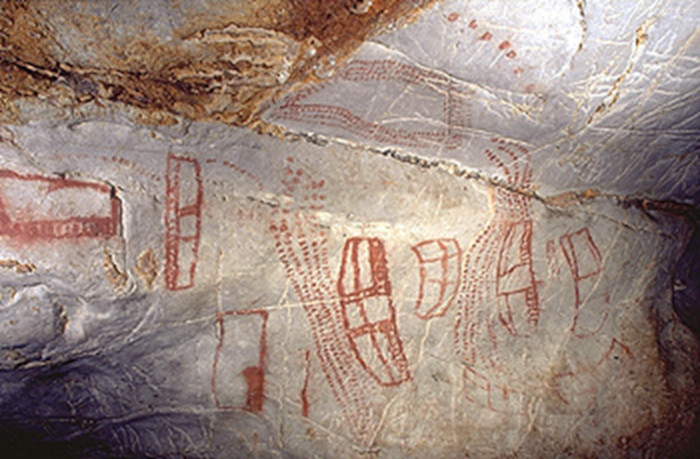
Parietal art in the cave at the Castle, Cantabria, Spain, one of the key sites where rhinoceros teeth bearing tool-use marks were found. (Gobierno de Cantabria / CC BY 3.0)
Expanding Our Understanding of Neanderthal Behavior
The discovery adds a new dimension to our understanding of Neanderthal cognitive complexity and resourcefulness. With 202 rhino teeth found at the El Castillo cave alone, 25 of which bore use marks, the findings hint at an intentional behavior that goes beyond mere opportunism. Neanderthals were not just eating these massive herbivores; they were systematically recycling their most durable parts into specialized equipment.
As anthropologists continue to investigate Paleolithic lifestyles, the full extent of Neanderthal cognitive abilities remains a subject of intense interest. Researchers are finding increasingly compelling evidence that suggests Neanderthals possessed advanced problem-solving skills and symbolic thought — traits once considered exclusive to modern humans. Recent discoveries have shown that Neanderthals created art, crafted complex tools, and cared for injured companions, painting an ever-richer picture of their inner lives.
"This study shows that [Neandertals] not only ate the animals, but they utilized their remains for their technology," noted archaeologist José Ramos-Muñoz of the University of Cadiz, who was not involved in the study. "It's a trait of modernity."
The use of rhinoceros teeth alongside bone and antler tools highlights a sophisticated approach to raw material exploitation, demonstrating that our extinct cousins were highly adaptable artisans capable of maximizing the resources available in their environment. As more sites are examined with modern analytical techniques, the full scope of Neanderthal technological innovation may prove even more remarkable than current evidence suggests.
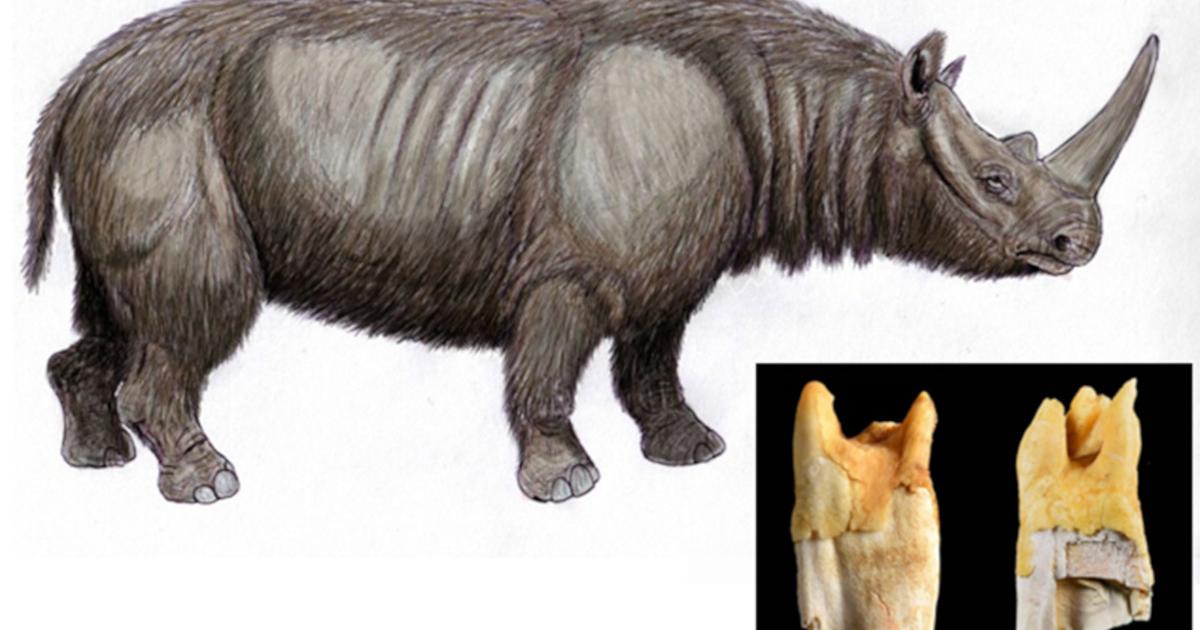
Top image: Illustration of the prehistoric narrow-nosed rhinoceros (Stephanorhinus hemitoechus), a species whose teeth were used as tools by Neanderthals. Source: DiBgd/CC BY-SA 4.0
By Gary Manners
References
Barbuzano, J. 2026. Neandertals used rhinoceros teeth as tools. Science News. Available at: https://www.sciencenews.org/article/rhino-teeth-neandertal-tool
Sanz-Royo, A., et al. 2026. Elucidating the use of rhinoceros teeth by Neanderthals: Between experiments and the fossil record. Journal of Human Evolution. Elsevier. Available at: https://www.sciencedirect.com/science/article/pii/S0047248426000230
Taub, B. 2026. Why Did Neanderthals Keep Hoarding Rhino Teeth? New Experiments Show They May Have Used Them As Tools. IFLScience. Available at: https://www.iflscience.com/neanderthals-from-spain-to-china-hoarded-rhino-teeth-turns-out-they-may-have-used-them-as-tools-83173