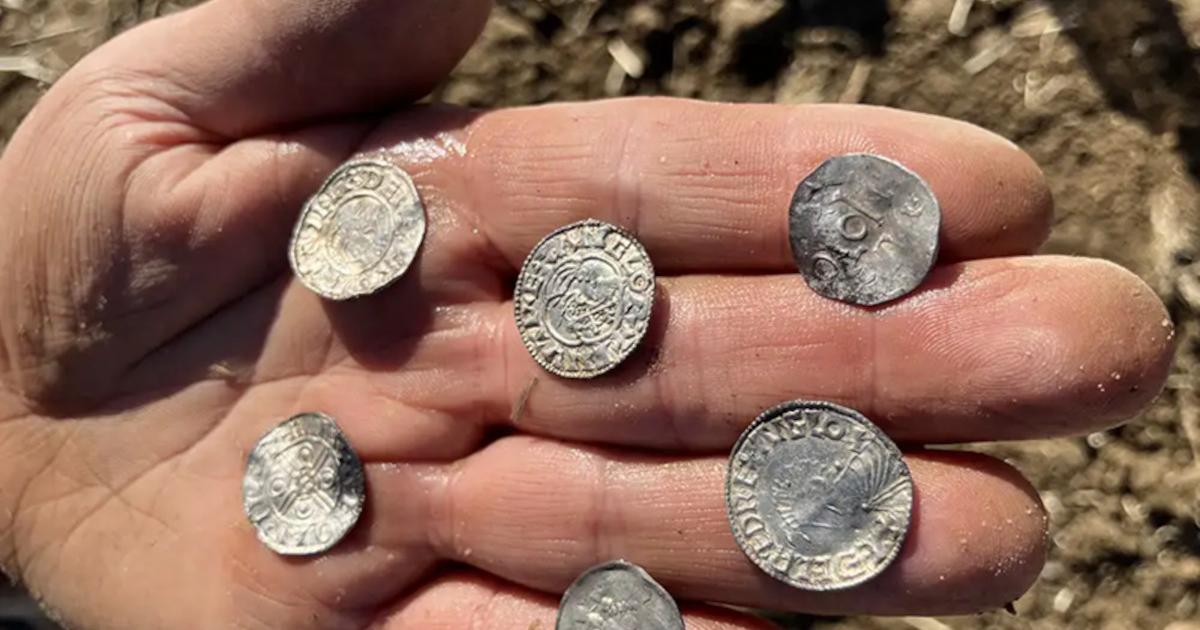

In an unprecedented discovery that has stunned archaeologists and historians alike, metal detectorists in Norway have unearthed the country's largest-ever Viking Age coin hoard. Found in a field near Rena in Åmot municipality, the “Mørstad Hoard” consists of nearly 3,000 silver coins and fragments of hacksilver, all remarkably preserved from the mid-11th century. The find offers a glittering window into the wealth, trade, and economic transition of Viking Age Scandinavia.
The discovery began on April 10, 2026, when two enthusiastic metal detectorists, Vegard Sørlie and Rune Sætre, were sweeping a farm field in Østerdalen, Innlandet County, reports Science Norway. What started as a few scattered signals soon turned into a continuous stream of silver. As of late April, the tally of recovered coins had surpassed 2,970, breaking all previous records for Norwegian Viking hoards.
- Highly Unusual Glistening Hoard Of Viking Silver Discovered In Sweden
- Large Stash of Viking Silver Found in Central Norway
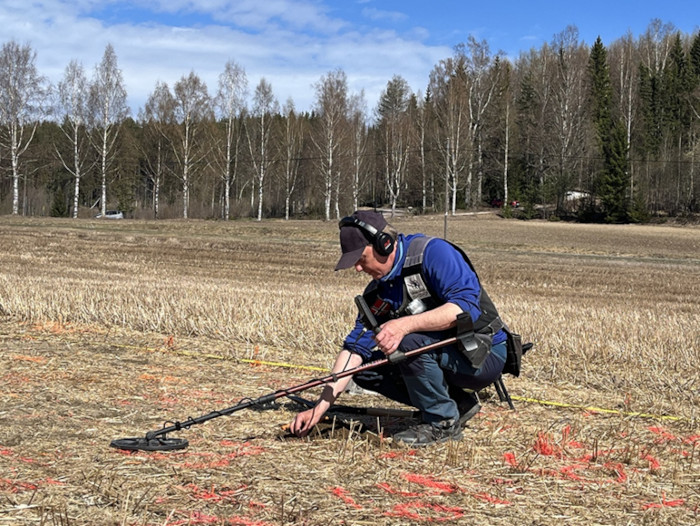
Two detectorists, Vegard Sørlie and Rune Sætre, found the first coins on Friday, 10 April. (Anne Engesveen / Innlandet County Authority)
“This is completely unprecedented. It's absolutely incredible,” said May-Tove Smiseth, an archaeologist with Innlandet County. “It has been absolutely unbelievable to stand there and watch these coins be lifted out of the ground. And to see the quality of the coins. They are so beautiful.”
The Mørstad Hoard is dominated by foreign currency, reflecting the extensive reach of Viking trade networks. The cache includes English (Anglo-Saxon) pennies minted under King Æthelred II and Knut the Great, as well as German, Danish, and early Norwegian coins. The dates on the coins range from the 980s to the 1040s, suggesting the hoard was deposited around the year 1047.
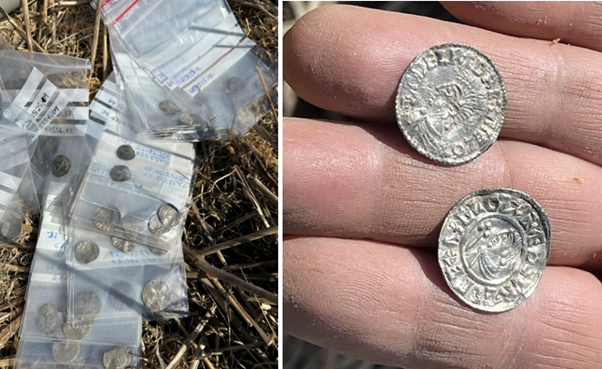
The coins are thoroughly documented and packed before being sent for further analysis. (Innlandet County Authority)
This specific timeframe is highly significant. It coincides with the reign of King Harald Hardrada (1046–1066), who established Norway's first national coinage system after returning from years of service as a mercenary in the Byzantine Empire.
“Foreign coinage dominates the circulation of money in Norway up until Harald Hardrada established a national coinage,” explained Professor Svein Harald Gullbekk, a coin expert at the Museum of Cultural History in Oslo. “The hoard was deposited right at the beginning of this development.”
Gullbekk emphasized the sheer scale of the discovery:
“We have previously found Viking Age coin hoards containing around 2,000 coins, but never more than 3,000. They have broken a barrier here. This is truly exceptional.”
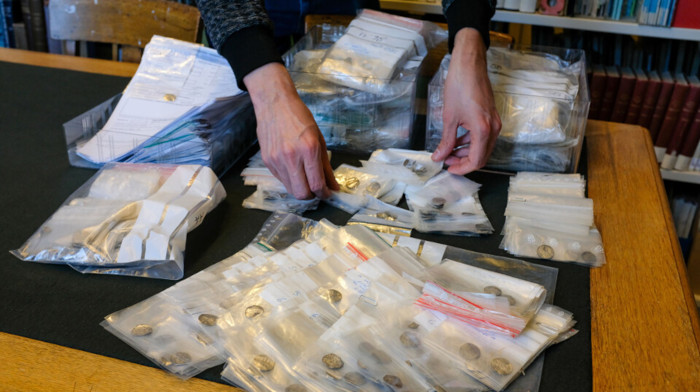
The extraordinary number of coins bagged and recorded for future examination. (Innlandet County Municipality)
But why was such a massive fortune buried in a field in eastern Norway? Archaeologists believe the area's booming iron industry may hold the answer. From the 900s to the late 1200s, the region saw enormous production of iron extracted from local bogs [2]. This processed iron was a highly valuable export commodity, traded across Europe.
“Someone used this land as a kind of safe deposit box and concealed these valuables here,” Gullbekk noted. “We are probably talking about either a person or a family who stored part of their wealth in the ground here.” Based on property records from the following centuries, the 3,000 silver coins would likely have been enough to purchase an entire farm.
In addition to the coins, the hoard contained pieces of cut silver, known as hacksilver, which was commonly used as bullion in weight-based transactions before coinage became standardized. One notable piece is a fragment of a beautifully decorated silver brooch.
- Yorkshire Hoard Reveals Silver Trade Took Vikings to the Middle East
- Enigmatic Gold Foil Pieces Found in Norway Link to 1400-Year-Old Pagan Temple
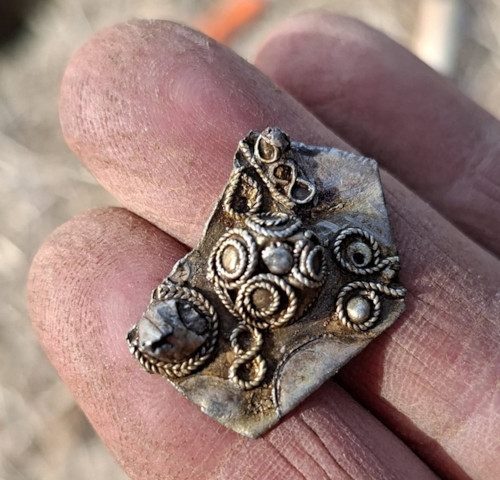
A fragment of a silver brooch, found alongside the coins. (Innlandet County)
The condition of the Mørstad Hoard is as remarkable as its size. The soil in the field is free of stones and relatively gentle on metals, leaving the silver in pristine condition.
“They have been preserved so well that they almost look newly minted,” Smiseth marveled.
The discovery has been hailed as a monumental event for Norwegian heritage. Hanna Geiran, Director General of the Directorate for Cultural Heritage, stated, “I could hardly believe my ears when I heard about the find. This is both a national and an international event”.
As excavations continue, the Mørstad Hoard will undoubtedly provide researchers with years of material to study, shedding new light on the economic powerhouses of the Viking Age and the individuals who amassed - and ultimately left behind - such extraordinary wealth.
Top image: Some of the nearly 3,000 silver coins from the Mørstad Hoard. Source: Florent Audy / Museum of Cultural History
By Gary Manners
References
Bergstrøm, I. I. 2026. Norway's largest Viking Age coin hoard has been discovered: "Truly exceptional". Science Norway. Available at: https://www.sciencenorway.no/archaeology-culture-the-viking-age/norways-largest-viking-age-coin-hoard-has-been-discovered-truly-exceptional/2656877
Museum of Cultural History. 2026. Enormous Viking Age coin hoard discovered. University of Oslo. Available at: https://www.khm.uio.no/english/news/enormous-viking-age-coin-hoard.html