
The discovery of traces of rare Tyrian purple dye in the gypsum burials of two infants in Roman York has shed exciting new light on the immense wealth and social standing of the city’s ancient elite. This remarkable find marks the first time that this costly colorant, normally reserved for emperors and the highest aristocracy, has been identified on Roman textile remains in York, challenging traditional assumptions about Roman funerary practices for children.
During the Roman period, Tyrian purple was a luxury commodity of unparalleled prestige, valued at up to three times the price of gold. The dye was labor-intensively manufactured by crushing thousands of murex marine molluscs to extract minuscule amounts of the vibrant purple colorant, a process perfected by the Phoenicians in the Bronze Age city of Tyre.
- Hidden Secrets of Roman Gypsum Burial Practice Revealed by Scanning
- Roman Baby Burial Challenges “Unceremonious Disposal” Dogma
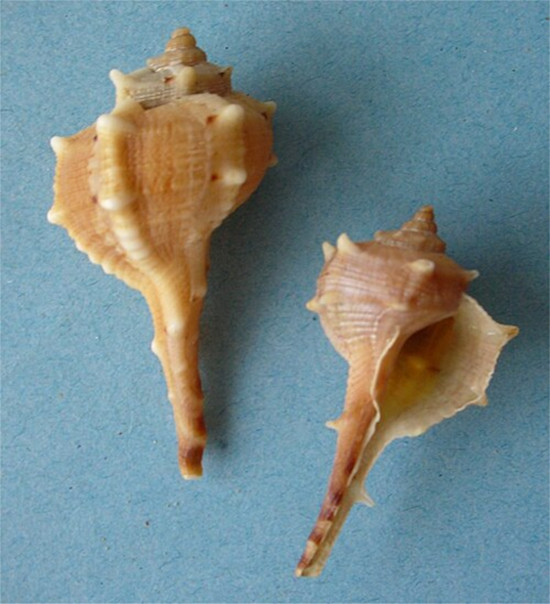
Two Bolinus brandaris shells, the source of the dye known as Tyrian purple. (Image: M. Violante/CC BY-SA 3.0)
A Luxurious Send-Off for the Youngest
The ground-breaking discovery was made by archaeologists and scientists from the University of York as part of the "Seeing the Dead" project. Traces of the purple dye, embellished with gold thread, were identified in two gypsum burials held in the collections of the York Museums Trust, dating back nearly 1,700 years to the late third or early fourth century AD.
One of the infants was buried with two adults in a stone coffin, while the second was interred in a lead coffin. The precious textiles were preserved by the Roman ritual of pouring liquid gypsum over the clothed bodies, which hardened and protected the imprints and chemical residues of the fabrics.
Professor Maureen Carroll, Project Director from the Department of Archaeology at the University of York, emphasized the significance of the find:
“This remarkable discovery tells us a lot about the importance of children in Roman York and the willingness of the family to give their baby the best possible send-off in tragic circumstances”.
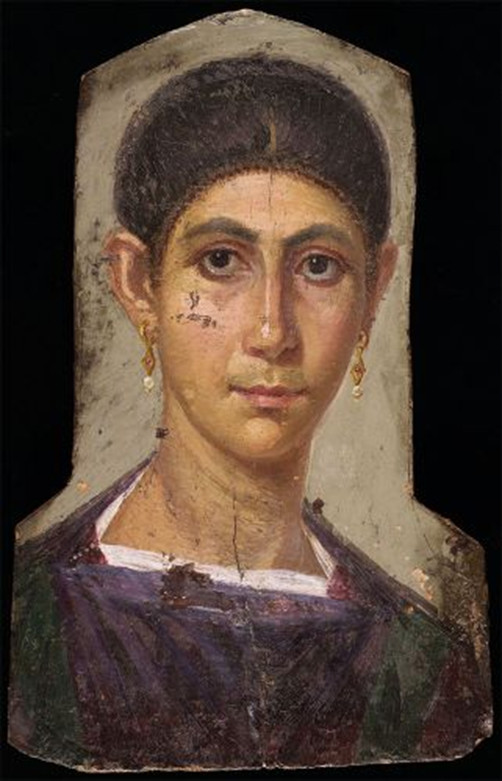
Portrait of a woman of the second century A.D. from the Fayum, Egypt, wearing a purple-dyed garment. (Arthur M. Sackler Museum, Gift of Dr. Denman W. Ross/Harvard Art Museums)
Challenging Roman Mourning Traditions
The findings from these Roman York burials add to a growing body of evidence that challenges the long-held assumption that Romans did not grieve infant deaths. Traditional Roman legal codes and social norms often forbade parents from publicly mourning babies, reflecting the harsh reality that up to three in ten infants did not survive their first year. However, the use of such extravagant Tyrian purple textiles for an infant no more than a few months old demonstrates profound familial grief and a desire to honor the child with the highest possible status.
- Spitalfields Roman Woman Reveals London's Multicultural, Morbid Past
- Ancient Fraud Exposed: Romans Faked Luxury Purple Dye
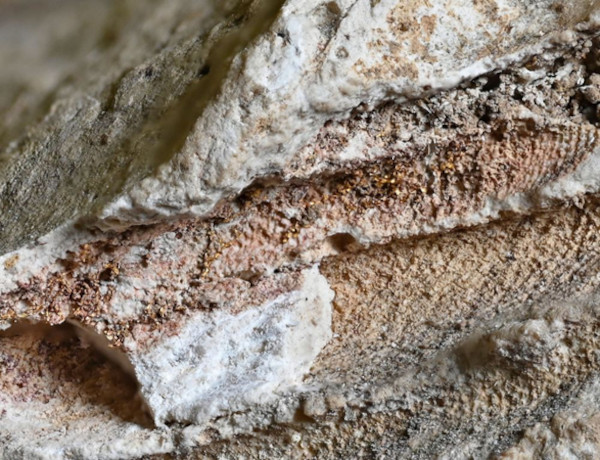
Purple dye residues with a pinkish hue and gold threads visible in the infant burial in York. (Seeing the Dead Project)
Dr. Jennifer Wakefield, who conducted the lab analysis, noted that while the purple traces were not always visible to the naked eye, chemical analysis using liquid chromatography-tandem mass spectrometry revealed the presence of 6,6-dibromoindigo, the accepted biomarker for ancient purple dye.
A Legacy of Imperial Splendor
Until this discovery, one of the only known occurrences of such luxurious textiles in Roman Britain was found in the famous burial of the Spitalfields woman in London. The presence of these opulent materials in Eboracum (Roman York) confirms that the city's wealthy inhabitants had access to exotic and incredibly expensive commodities imported from the far reaches of the empire.
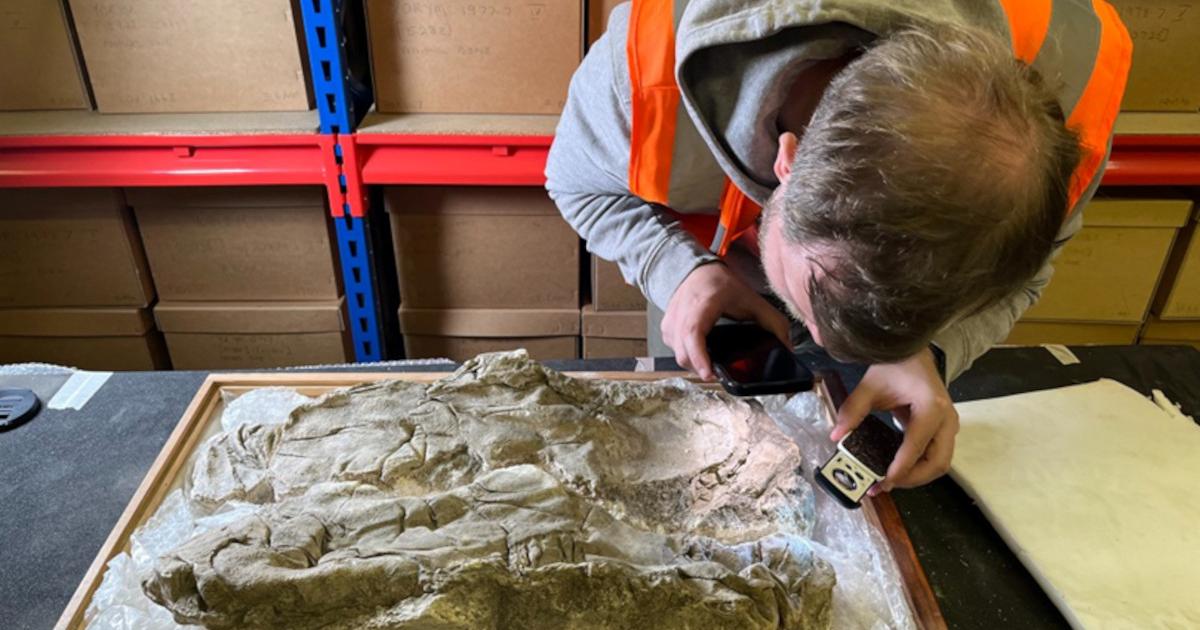
The Seeing the Dead team examine the infant burial casing for visible residues and features. (Image: Adam Parker) Source
As further sampling continues on other gypsum casings from York and North Yorkshire, researchers hope to uncover even more secrets about the lives, deaths, and funerary rituals of the ancient Roman elite.
Top image: Researcher examining the Roman gypsum burial at the Yorkshire Museum. Source: University of York
By Gary Manners
References
Carroll, M. & Wakefield, J. 2026. Discovery of Tyrian Purple Textiles in Roman Gypsum Burials in York. Seeing the Dead Project. Available at: https://seeingthedead.ac.uk/blog/discovery-tyrian-purple-textiles-roman-gypsum-burials-york
University of York. 2026. Rare imperial purple cloth found in Roman infant burials in York. Available at: https://www.york.ac.uk/news-and-events/news/2026/research/rare-purple-cloth/