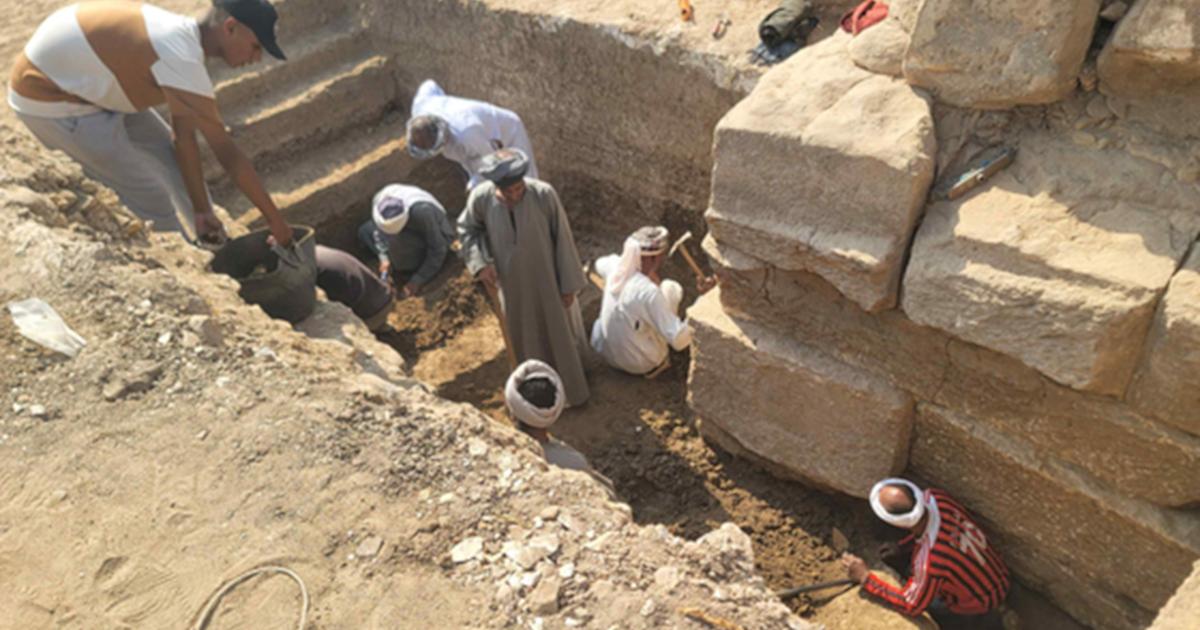

A team of South Korean researchers has made a major historical discovery in Luxor, Egypt, unearthing a 3,300-year-old cartouche bearing the name of Pharaoh Ramses II. The hieroglyphic inscription was found at the base of the Ramesseum Temple's first pylon, marking the first time such an artifact has been discovered in this specific area of the ancient ruins. The find provides critical new evidence for dating the construction phases of the mortuary temple and highlights the growing international collaboration in Egyptian archaeology.
The discovery was made by an excavation team from the Korea National University of Cultural Heritage, operating under the Korea Heritage Service (KHS). Since June 2025, the team has been meticulously surveying the northern section of the collapsed first pylon at the Ramesseum, a massive mortuary temple built by Ramses II (reigned 1279–1213 BC) on the west bank of the Nile. According to the KHS, the cartouche - an oval frame enclosing royal hieroglyphs that symbolize eternal protection - was found inscribed on the foundation stones of the pylon.
- The Life and Death of Ramesses II, Ramesses the Great
- Archaeologists unearth tomb of Queen at the Mortuary Temple of Ramesses II
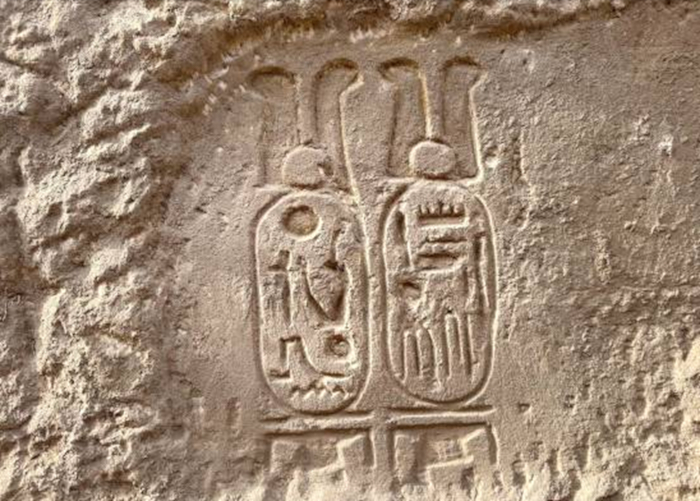
Cartouche of Ramses II discovered at the base of the pylon of the Ramesseum Temple in Egypt. (Korea Heritage Service)
First Discovery at the Pylon Gate
While a French archaeological team had previously discovered a Ramses II cartouche in the innermost sanctuary of the temple, this new find at the entrance gate is unprecedented. "The shape of the cartouche and the pharaoh's name are significant historical criteria for determining the exact era of the ruins, making this discovery historically valuable," a KHS official stated [2]. The team also uncovered an architectural element inscribed with a previously unrecorded place name, which could offer fresh insights into the territorial expansion of Egypt during Ramses II's long and prosperous reign.
- Ancient Egyptian School Found at Mortuary Temple of Ramesses II
- Cartouche Reveals Unearthed Egyptian Palace Belonged to Ramesses the Great
A Temple Reborn: Restoration and Training
The Ramesseum was designed to honor the achievements of Ramses II and serve as a place for his posthumous veneration. Today, only parts of the grand structure remain, with its massive front pylon having collapsed centuries ago. The Korean team's work is part of a broader Official Development Assistance (ODA) project initiated after a 2022 agreement between Egypt and South Korea. To facilitate the delicate restoration work, the researchers are installing a temporary scaffold shelter over the site—the first time such a protective structure has been used at a conservation site in Egypt.
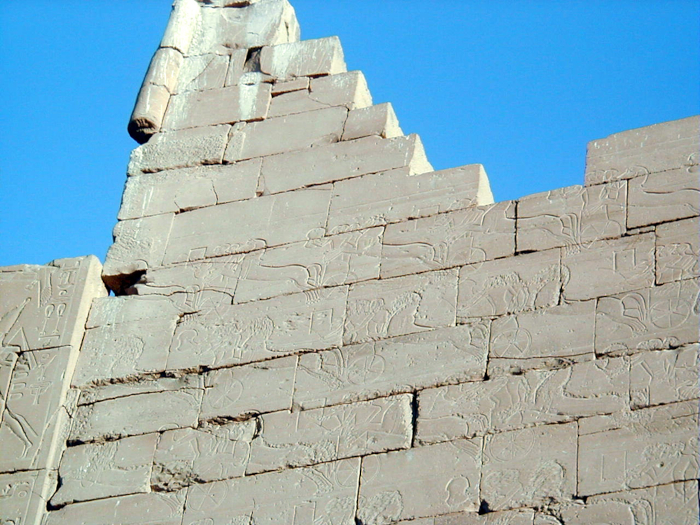
Engraved battle scenes on the Ramesseum's First Pylon, Thebes. (CyArk/CC BY-SA 3.0)
Korea's Growing Role in Global Heritage Conservation
This project not only aims to restore the fallen pylon but also involves training Egyptian staff in advanced archaeological techniques, including 3D scanning and architectural measurement. South Korea has been conducting similar ODA heritage projects since 2013, working at sites such as Angkor Wat in Cambodia and Machu Picchu in Peru. As the restoration progresses, historians anticipate that the Ramesseum may yield even more secrets about the life and times of one of ancient Egypt's most powerful rulers.
Top image: Excavatyions at the Ramesseum at Luxor. Source: Korea Heritage Service
By Gary Manners
References
Cho, Y. 2026. Korean researchers make major discovery of Ramses II hieroglyphs at Luxor, Egypt. Korea JoongAng Daily. Available at: https://koreajoongangdaily.joins.com/news/2026-04-09/culture/koreanHeritage/Korean-researchers-make-major-discovery-of-Ramses-II-hieroglyphs-at-Luxor-Egypt-/2565344
Heo, Y. 2026. Korean Team Discovers Ramses II Cartouche. The Chosun Daily. Available at: https://www.chosun.com/english/travel-food-en/2026/04/10/BJJRQY7AOFBOFPNZTC7SHG2S54/