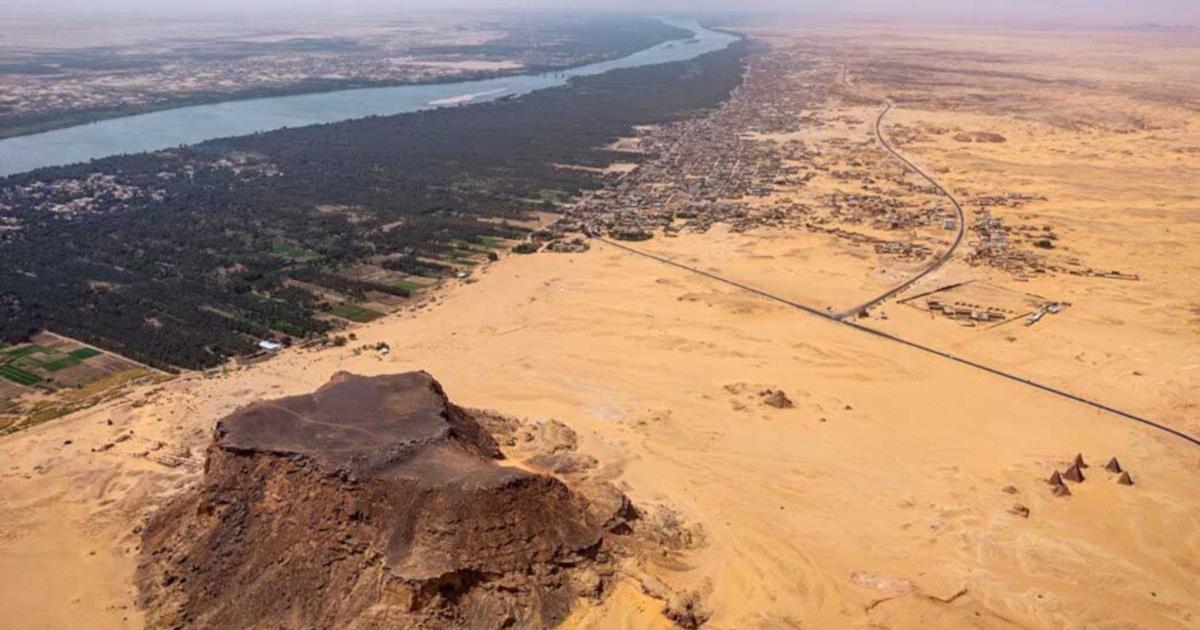

Researchers from the University of Michigan, working alongside Sudanese archaeologists, examined the river valley beneath the site to determine the geological processes that led to the city's successful settlement. Their findings, published in the Proceedings of the National Academy of Sciences, offer a unique perspective on the Holocene evolution of the riverine environment at Jebel Barkal, where the city of Napata took shape. The research team drilled 26 sediment cores across the valley, reaching depths of up to 13 meters, and used advanced dating techniques to peer into 12,500 years of Nile history.
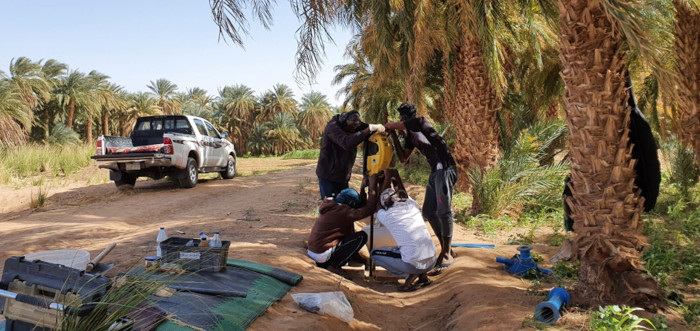
A team of Sudanese workers takes sediment core samples from the Nile River valley near Jebel Barkal. (Pawel Wolf, Jebel Barkal Archaeological Project/University of Michigan)
The Gentling of the Nile River
The sediment record showed a major shift in the behavior of the Nile River. For the first 8,000 years of the period studied, the Nile carved deeply into its valley. However, around 4,000 years ago, rainfall patterns changed, causing the river to slow down and deposit sediment instead of eroding the land. Over time, layers of clay and silt accumulated to a thickness of nearly 10 meters, forming a broad and fertile floodplain that was ideal for farming and human settlement.
The Rise of Napata and the Kushite Kingdom
These favorable environmental conditions shaped a landscape perfectly suited for a major settlement. Napata developed into a thriving city between 1070 BC and 350 AD. Originally founded as an Egyptian fortified outpost during the New Kingdom, it later became the principal urban center of the Kushite dynasty. After the decline of Egypt's New Kingdom, the Kings of Kush established the 25th Dynasty by expanding their territory to include Egypt, ruling as the "Black Pharaohs."
At the foot of the prominent sandstone outcrop known as Jebel Barkal, the Kushites built magnificent palaces, pyramids, and temples. The site held immense religious importance, reinforcing its role as a cultural center. Kush was a dominant player in the ancient world, interacting with Egypt, the Assyrians, Greeks, Persians, and the Roman Empire. Today, Jebel Barkal and the sites of the Napatan region are recognized as a UNESCO World Heritage site.
- Ancient Nubia: The Melting Pot of Egypt and Black Africa
- Records from Early 20th Century Nubian Excavations Miraculously Recovered
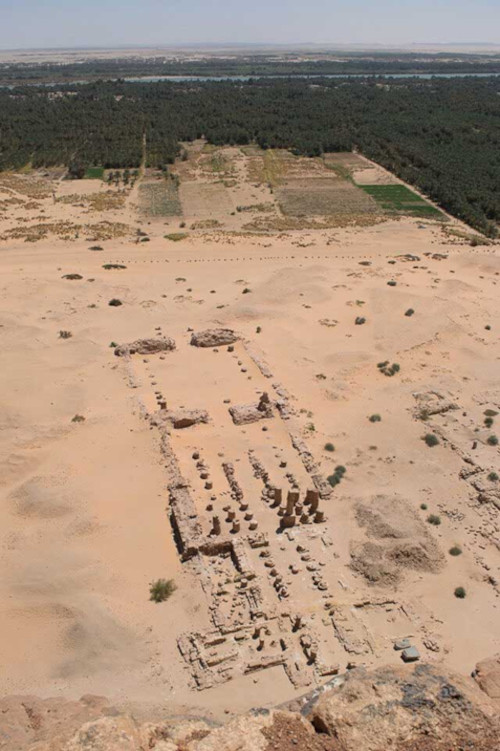
Temple of Amun in the ancient city of Napata, now called Jebel Barkal (Raymond Silverman/University of Michigan)
Ongoing Research Amidst Conflict
Despite the extensive archaeological research conducted in Egypt, the surrounding Nile valley in Sudan has remained poorly understood. Archaeologist Geoff Emberling explained that "because of a history of relatively lower investment in research in Sudan, some very basic questions haven't been addressed." The recent study provides the first systematic geomorphological analysis in Sudan relating to these ancient cultures, highlighting how environmental change shaped the rise and persistence of Nubia.
Remarkably, the research at Jebel Barkal continues even as Sudan experiences its current war. Local Sudanese archaeologists from the National Corporation for Antiquities and Museums remain active in the field, guided by international partners. Their dedication ensures that the rich history of the Kushite kingdom and its deep connection to the Nile River will continue to be uncovered for future generations.
Top image: Pictured is Jebel Barkal (ancient Napata), a UNESCO World Heritage site in northern Sudan, with the sandstone outcrop, temples, and pyramids in the foreground and the Nile and its floodplain in the background, viewed toward the southwest (downstream). Source: Sami Elamin (2026)/Jebel Barkal Archaeological Project
By Gary Manners
References
Emberling, G., Peeters, J., Winkels, T. G., Wolf, P., Skuldbøl, T. B. B., Chamberlain, E. L., Büchner-Matthews, S., & Elamin, S. 2026. Holocene Nile dynamics shaped the physical and cultural landscape of ancient Nubia. Proceedings of the National Academy of Sciences. Available at: https://www.pnas.org/doi/10.1073/pnas.2529986123
EurekAlert!. 2026. Location, location, location: How the Nile helped an ancient Sudanese city thrive for centuries. Available at: https://www.eurekalert.org/news-releases/1125571
Radley, D. 2026. How Nile River stability shaped the rise of ancient Napata in Sudan’s Kushite kingdom. Archaeology News Online Magazine. Available at: https://archaeologymag.com/2026/04/nile-river-and-the-rise-of-ancient-napata/
Archaeology Newsroom. 2026. How the Nile helped an ancient Sudanese city thrive for centuries. Archaeology Wiki. Available at: https://www.archaeology.wiki/blog/2026/04/29/how-the-nile-helped-an-ancient-sudanese-city-thrive-for-centuries/