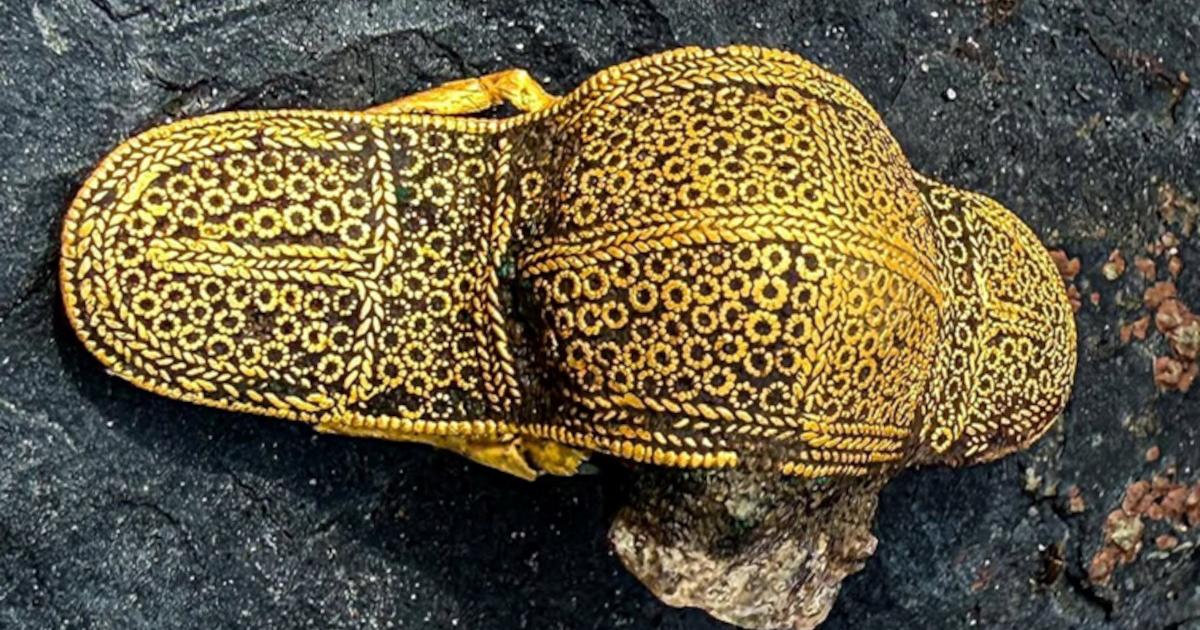

A 1,500-year-old gold brooch has been discovered in Denmark, offering a rare glimpse into the elite adornment of the Late Germanic Iron Age. Unearthed by metal detectorist Mikkel Warming, the find initially registered as a weak signal, similar to modern metallic debris. However, beneath the soil lay a stunning piece of ancient craftsmanship, provisionally dated to the mid-6th century AD.
The small object, measuring approximately four centimeters (1.6 inches) in length, is densely decorated with repeated circular motifs arranged in a highly regular pattern. Such intricate ornamentation is characteristic of advanced metalworking techniques like filigree and granulation.
A Signal from the Past
For detectorists, important finds often begin with disappointment. Warming noted that the tone from his detector sounded strange and vague, much like crumpled aluminum or discarded bottle caps. Yet, the moment the golden color broke through the heavy soil after nearly fifteen centuries, it provided a direct connection to the past. The immediate question that arose was: who had once worn such a jewel?
- Stunning and Unique Golden Treasure Hoard Found In Denmark
- Exquisitely Made 1700-year-old Gold Neck Ring Found in Denmark
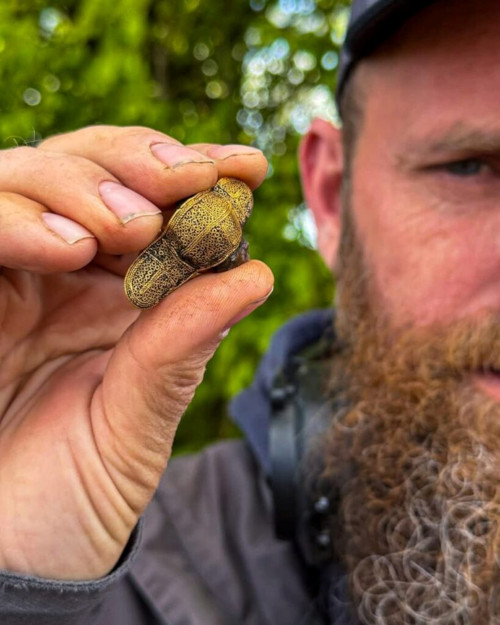
Finder Mikkel Warming holding the brooch. (Mikkel Warming / Linda Warming)
The brooch is believed to be a short-arm fibula, a type of fastening pin used to secure clothing. Its fastening mechanism includes an iron pin, now extensively corroded and consolidated into a compact mass on the reverse side. This corrosion confirms its function as a true garment fastener.
The Significance of the Find
Although present-day Denmark lay outside the Roman Empire, it was not isolated from the wider world. During the late Germanic Iron Age, communities in Scandinavia were reorganizing around regional power centers and warrior elites. Roman coins, glass, and metalwork moved north through trade and diplomacy, and local craftspeople adapted these foreign ideas to northern tastes.
Fibulae played an important role in this society. They not only fastened garments but also communicated identity. The metal, form, and decoration of a brooch could signal wealth, rank, or access to skilled makers. A gold example with such dense ornament was a visible statement of power and status.
Unlocking the Secrets of the Brooch
The artifact will be submitted to a local museum for formal analysis, where experts will conduct a typological comparison and metallurgical characterization. These analyses will assist in determining production techniques, material composition, and cultural affiliation.
- Ancient Viking Riches Unearthed on a Farm in Denmark
- Rare Hoard of 2000-year-old Curved Celtic Gold Coins Found in Germany
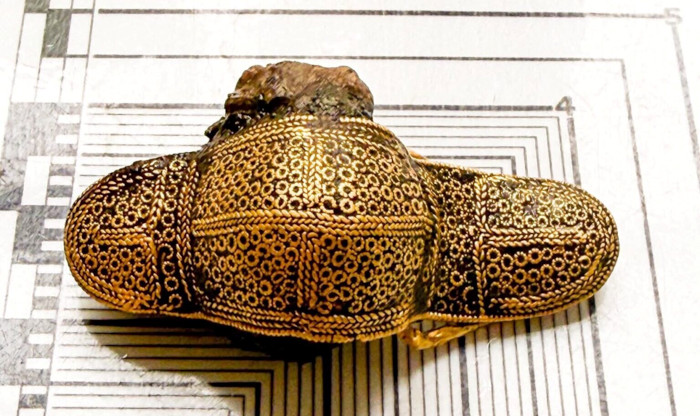
The brooch placed on a measurement chart.
The exact imagery of the brooch remains open to interpretation. Its elongated form and dense rounded decoration have invited various visual comparisons, from organic shapes to symbolic body imagery. Such ambiguity is common in early medieval northern art, where forms could be deliberately composite and suggestive.
What is certain is that the brooch belonged to a visual culture where precious materials and skilled ornament helped create authority. For the person who wore it, gold was not silent; it marked the wearer as someone with access to wealth and social networks. This discovery serves as an eloquent survival from a society where clothing, craftsmanship, and status were intricately intertwined.
Top image: Rare 1,500-year-old gold brooch discovered in Denmark. Source: Mikkel Warming / Linda Warming
By Gary Manners
References
Arkeonews. 2026. Rare Germanic Iron Age Gold Brooch Found in Denmark After 1,500 Years Underground. Available at: https://arkeonews.net/rare-germanic-iron-age-gold-brooch-found-in-denmark-after-1500-years-underground/
Milligan, M. 2026. Elaborately crafted gold brooch uncovered in Denmark. HeritageDaily. Available at: https://www.heritagedaily.com/2026/04/elaborately-crafted-gold-brooch-uncovered-in-denmark/157924
StileArte, 2026. Gold brooch discovered in Denmark. Available at: https://www.stilearte.it/spilla-oro-danimarca-vi-secolo-ritrovamento-fibula-germanica/