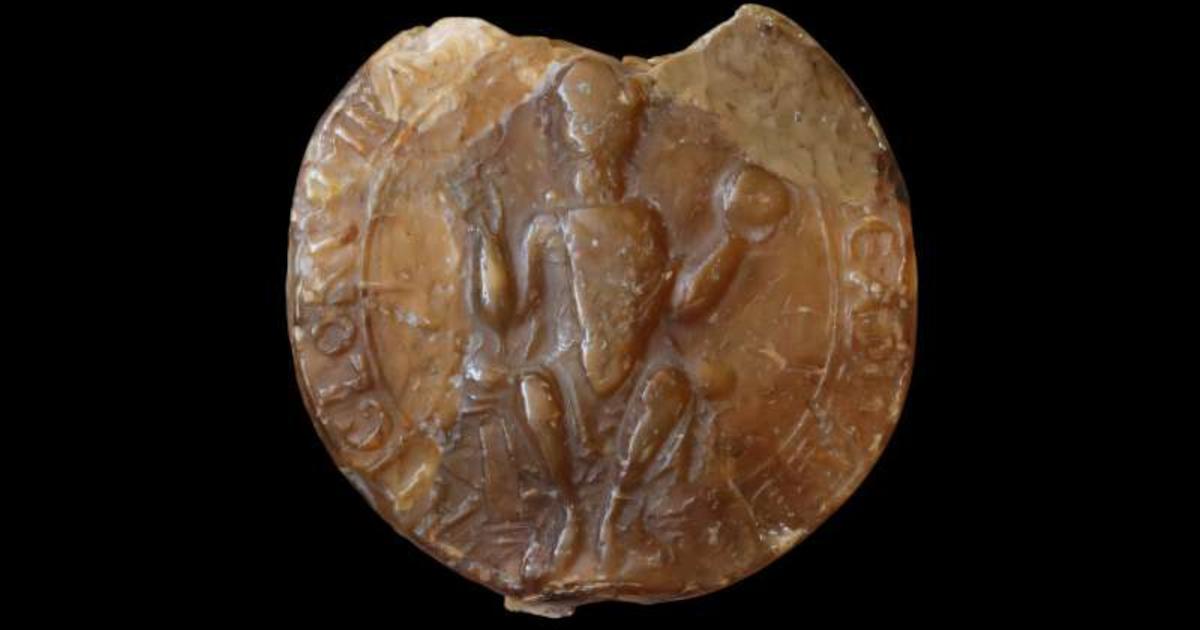

An 11th-century Anglo-Saxon seal belonging to King Edward the Confessor has been dramatically rediscovered in Paris, more than four decades after it was declared lost. The wax impression, known as the 'Saint-Denis seal', vanished without official explanation in the 1980s from the Archives Nationales, where it had been preserved for nearly two centuries.
The rediscovery of this precious artifact offers fresh insights into the political ambitions and international connections of pre-Norman England. It is considered by far the best-preserved impression of the three seals known to have been used by Edward, and its loss had sparked significant consternation among international historians.
The wax artifact was found in 2021 by Clément Blanc, a curator at the Archives Nationales, and Dr. Guilhem Dorandeu, a doctoral researcher at the École française de Rome. They were conducting research in a section of the archive containing a collection of detached and damaged seals, known as Sceaux détachés. The seal had not been stolen; it had simply been misfiled.
This remarkable find has been detailed in a new academic paper published in the journal Early Medieval England and its Neighbours, co-authored by Dr. Dorandeu and Professor Levi Roach of the University of Exeter's Department of Archaeology and History.
- Norman Conquest Coin Hoard Bought for Record-breaking Sum
- Nova Anglia, The Forgotten Anglo-Saxon Enclave In Ukraine
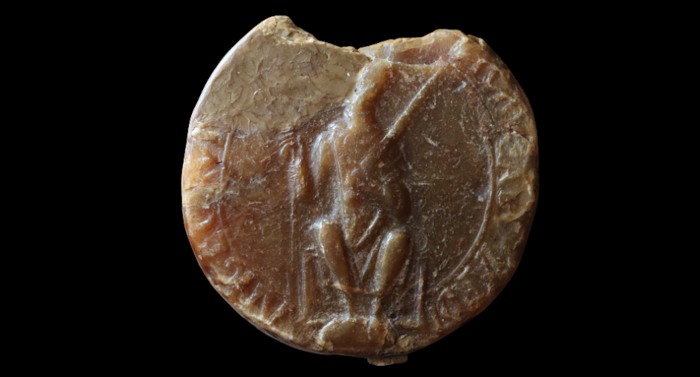
Saint-Denis Seal Impression of Edward the Confessor (1053 × 1057). (© Paris, Archives nationales, Sc/x/832) (University of Exeter)
Byzantine Influence on an Anglo-Saxon King
Edward the Confessor, who reigned from 1042 to 1066, was the last king of England from the House of Wessex before the Norman Conquest. His reign is often viewed as a transitional period, bridging the Anglo-Saxon and Norman worlds while connecting England to wider European and Byzantine influences.
The researchers note that the seal and its associated document demonstrate that the king consciously drew upon Byzantine and European traditions. Dr. Dorandeu explained that pendant seals were two-sided wax impressions attached to documents by a cord or ribbon, used by monarchs to authenticate important state papers.
"Edward’s seal is, therefore, a precious historical monument, and its recovery offered us a great opportunity to study it closely and consider what it says about the ambitions and influences swirling around the King and his advisors," said Dr. Dorandeu.
Professor Roach described the find as a genuine "wow" moment. "This is our most important seal from pre-Conquest England, not least because it is the only intact one we have, and so the only one that offers us the chance to study its iconography and decipher its place in the diplomatic affairs of the country," he stated.
- Silver Signature: Medieval Seal Brings a Woman's Life to Light
- Warrior Pope's Seal is 1.5 Millionth Archaeological Find in England
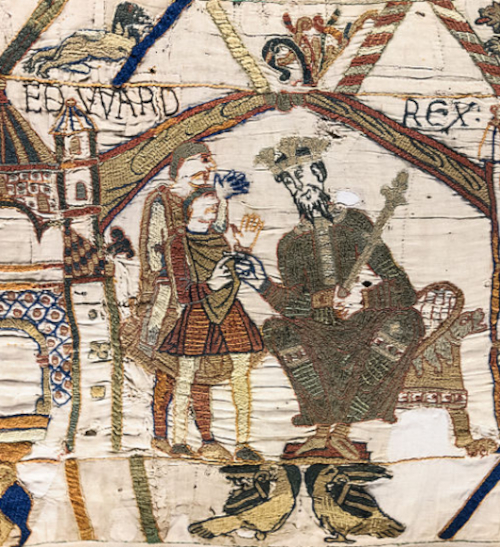
Edward the Confessor depicted on the opening scene of the Bayeux Tapestry. (Public Domain)
A New Era of Royal Authentication
The seal features the inscription 'Anglorum basileus', utilizing the title for the Byzantine emperor. The authors suggest this was a likely reinterpretation of their venerable style. Furthermore, the inclusion of a sword on one side of the seal evokes contemporary Byzantine coins depicting sword-bearing rulers, such as Constantine the Great.
Dr. Dorandeu pointed out that while a sword might seem a self-evident royal attribute, it was rarely used in English history at that point. Its appearance suggests strong connections with, and quick responses to, Byzantine iconography, possibly transmitted through Europe by Anglo-Saxon mercenaries.
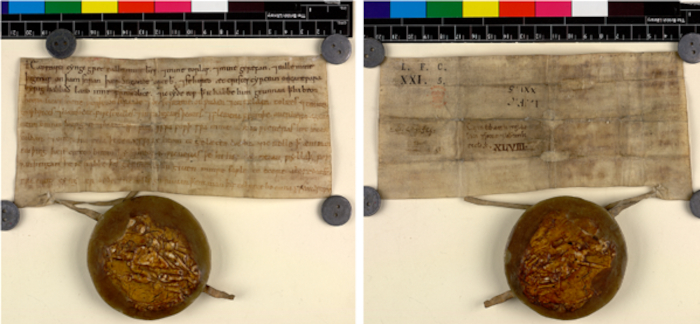
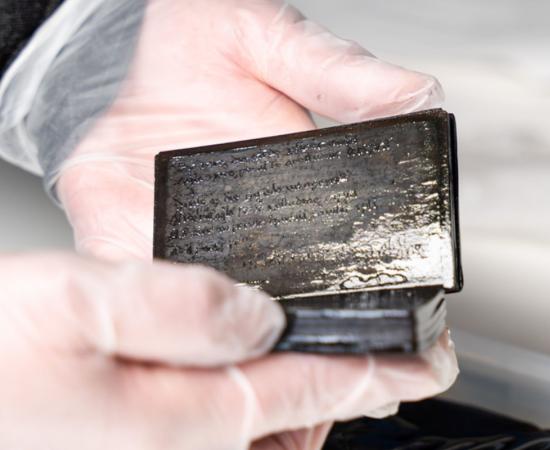
Writ-charter document with the attached seal of Edward the Confessor. (Archives nationales) (Early Medieval England and its Neighbours)
The seal is also linked to the emergence of the writ-charter, a new type of document used by kings to grant land or rights and command local officials. Professor Roach noted that the writ-charter, as a sealed document, was almost certainly a novelty of Edward's reign, adopting a continental form of authentication that aligned with his hegemonic ambitions.
These findings reinforce the perspective that England's ruling class was already significantly influenced by continental Europe, including Norman France, well before the monumental events of 1066 and the Battle of Hastings. The recovery of the Saint-Denis seal not only restores a lost piece of history but also illuminates the sophisticated diplomatic strategies of the last great Anglo-Saxon king.
Top image: Saint-Denis Seal Impression of Edward the Confessor (1053 × 1057). (© Paris, Archives nationales, Sc/x/832) Source: University of Exeter
By Gary Manners
References
Dorandeu, G., & Roach, L. 2025. Lost and Found: the Saint-Denis Seal Impression of Edward the Confessor (1053 × 1057) and the Development of the Early English Writ-Charter. Early Medieval England and its Neighbours. Available at: https://news.exeter.ac.uk/faculty-of-humanities-arts-and-social-sciences/lost-seal-of-edward-the-confessor-found-after-being-missing-for-40-years/
University of Exeter. 2026. Lost seal of Edward the Confessor found after being missing for 40 years. Available at: https://news.exeter.ac.uk/faculty-of-humanities-arts-and-social-sciences/lost-seal-of-edward-the-confessor-found-after-being-missing-for-40-years/
Arkeonews. 2026. Lost Anglo-Saxon Royal Seal of Edward the Confessor Rediscovered After 40 Years in Paris. Available at: https://arkeonews.net/lost-anglo-saxon-royal-seal-of-edward-the-confessor-rediscovered-after-40-years-in-paris/