
During the devastating plague outbreaks of 17th-century Europe, the disease did not strike equally. A recent bioarchaeological study of plague victims from a hospital cemetery in Basel, Switzerland, has revealed that young, lower-class laborers bore the brunt of the mortality. This research highlights how socioeconomic status, work strain, and access to social networks were critical factors in surviving epidemics, a reality that echoes modern pandemics like COVID-19.
The findings, published in the journal Antiquity, stem from excavations beneath Basel’s Stadtcasino, the former site of the Barfüsser monastery’s cloister garden (Kreuzgarten). By the 17th century, the monastery had been converted into a hospital. Archaeologists uncovered more than 260 graves dating to Switzerland's last recorded plague outbreak between 1665 and 1670 AD. Ancient DNA analysis confirmed the presence of Yersinia pestis, the bacterium responsible for the plague, in at least five individuals from a multiple burial pit.
- English Medieval Hospital Shows Horrors of Black Death
- Cemetery Reveals Medieval Equivalent of Social Benefits System
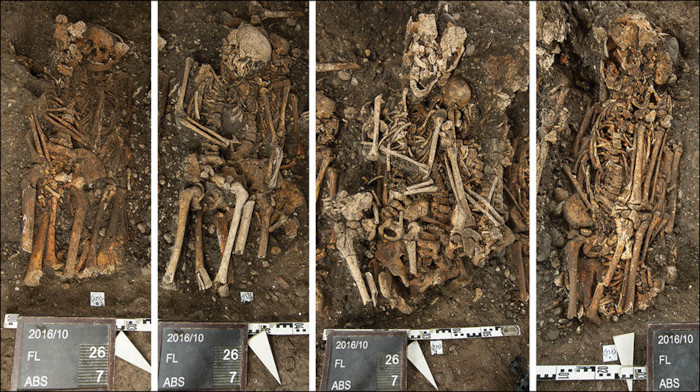
From left to right, graves 229, 230, 231 and 232 during excavation, upmost layer (figure © Archäologische Bodenforschung Basel-Stadt; photographs by A. Jost//Antiquity Publications Ltd).
Work Strain and Vulnerability
The research team, led by osteoarchaeologist Laura Rindlisbacher from the University of Basel, focused on detailed osteological observations to determine the health and social status of the victims. The results were striking: the individuals in the multiple burials were predominantly young, with an average age of just 17.7 years. Furthermore, their bones displayed numerous pathological conditions indicative of degenerative diseases, such as osteoarthritis and spinal wear.
These physical markers suggest that the victims were adolescents who were already engaged in strenuous, physically demanding work. This is a strong indicator of lower social status.
"Work strain was of particular interest for us, as this represents one of the most important factors for vulnerability during a pandemic," explained Rindlisbacher. "If somebody can’t forego work to survive, even the danger of contracting a deadly disease cannot stop these persons from working."
- Black Women Were Primary Victims of Black Death in Medieval London
- Bizarre European Medieval Plague Cures
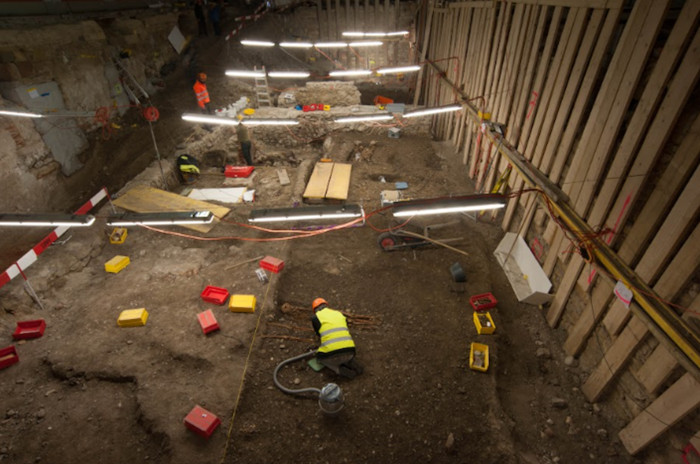
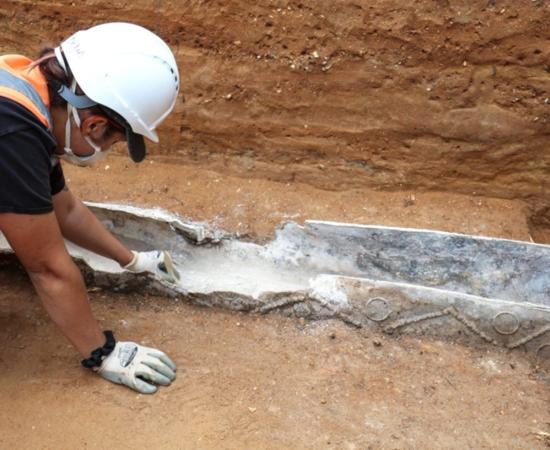
Impression during the indoor excavation in the music hall of the Stadtcasino (Archäologische Bodenforschung Basel-Stadt, Adrian Jost/Antiquity Publications Ltd)
The necessity to work for essential income meant that young laborers from lower social classes were not only more exposed to the infection but also more likely to succumb to it due to their already compromised health.
Social Capital and Survival
The study also delved into historical sources from the Basel State Archives to understand the social dynamics of the period. The city of Basel, heavily reliant on trade, was frequently affected by plague outbreaks because the city council was often reluctant to close the gates, facilitating the spread of the disease.
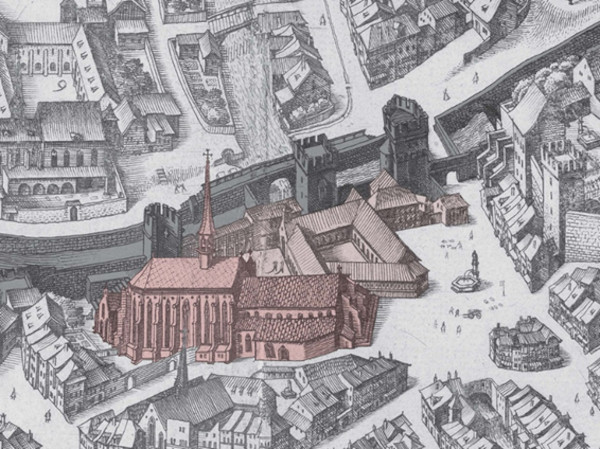
The Merian map of 1615 shows the Barfüsser monastery with the church and the Kreuzgarten in the back right. The Stadtcasino building stands on this site today. (Editing: Peter von Holzen, Archäologische Bodenforschung Basel-Stadt/University of Basi))
Importantly, the research highlighted that the divide in mortality occurred not just between the rich and the poor, but even within the lower classes themselves, depending on their social clout.
"Besides municipal schemes, medical care was provided by family or similar close-knit social networks," Rindlisbacher noted. "While social cohesion was strong in the Early Modern period, it did not automatically include everyone. In these social dynamics, citizenship status as well as perceptions of honor and respectability were an important social capital."
This means that individuals lacking citizenship, strong family ties, or societal respectability, often the poorest laborers, were left without adequate medical care or support when the plague struck.
Echoes of Modern Pandemics
The parallels between the 17th-century plague in Basel and the recent COVID-19 pandemic are profound. Both crises put a spotlight on the inextricable links between socioeconomic conditions and the impact of infection. The COVID-19 pandemic demonstrated how factors such as economic status, citizenship, and access to social support networks disproportionately affected the vulnerability of specific social groups.
"The Covid-19 pandemic raised many questions about social inequality," said Rindlisbacher. "We wanted to explore these same questions for our Early Modern sample." The findings prove that the unequal impact of pandemics is by no means a new phenomenon.
"It was striking to observe the extent to which young lives were cut short by the plague, especially the lives of disadvantaged lower-class youths already subject to hard and frequent labour in Early Modern Basel," Rindlisbacher concluded. "We were also surprised by how clearly some of the social determinants of well-being and survival observed during the Covid-19 pandemic also emerged for the Early Modern period."
This multidisciplinary study provides a rare and poignant insight into the lives of the working poor in Early Modern Europe, revealing that even in the face of death, society was far from equal.
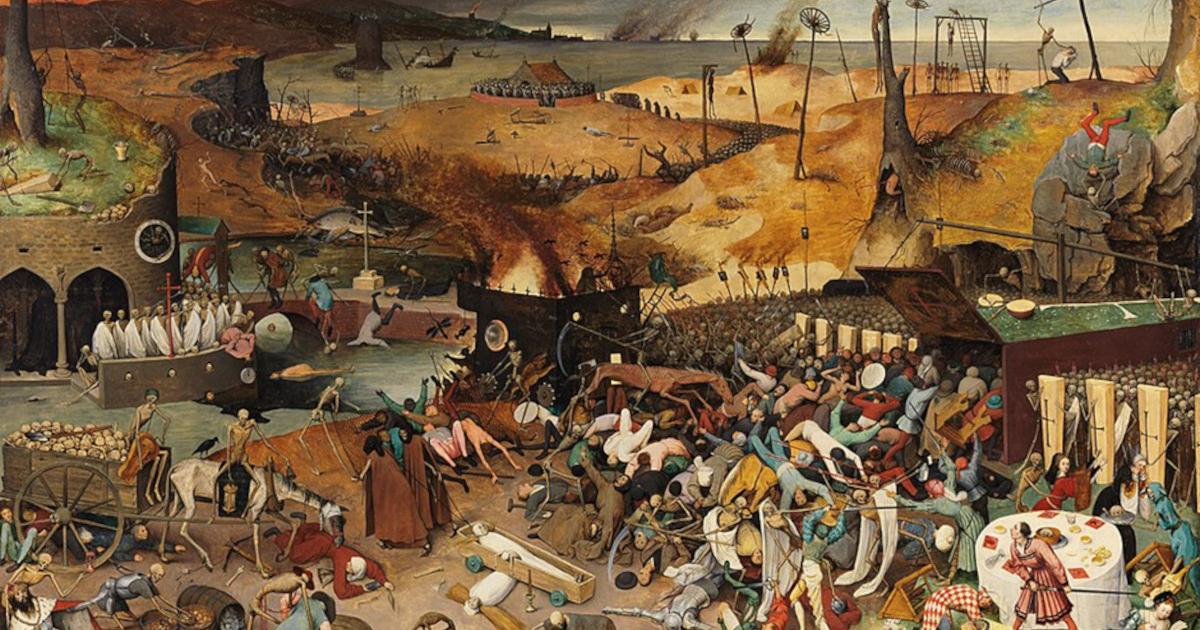
Top image: The Triumph of Death (c. 1562 ) by Pieter Bruegel the Elder, depicting the devastation of the plague. Source: Public Domain
By Gary Manners
References
Rindlisbacher, L., Flatscher, E., Krause-Kyora, B., Gerling, C. & Pichler, S. L. 2026. All equal in the face of death? Life histories of confirmed victims of the last plague epidemic in Basel (Switzerland). Antiquity. Cambridge University Press. Available at: https://doi.org/10.15184/aqy.2026.10297
University of Basel. 2026. Plague outbreaks in the Early Modern period hit working youths the hardest. Available at: https://www.unibas.ch/en/News-Events/News/Uni-Research/Plague-outbreaks-in-the-Early-Modern-period-hit-working-youths-the-hardest-social-status-vulnerability-excavations-Basel-history.html